
Mobile phone repair technology has become one of the most marketable technical courses in Kenya due to the rapid growth of smartphone usage across the country. Recent trends show a steady rise in mobile device ownership and upgrades, creating high demand for skilled mobile repair technicians. This makes the mobile repair course in Kenya an excellent choice for youth looking for quick, practical, and profitable skills.
At Inceptor, our Mobile Phone Repair Training in Nairobi is designed to give learners hands-on skills in smartphone repair, screen replacement, mobile flashing, unlocking, and advanced electronic repair techniques. The course focuses on real-world troubleshooting and practical diagnostics to prepare you for actual repair jobs or your own service business.
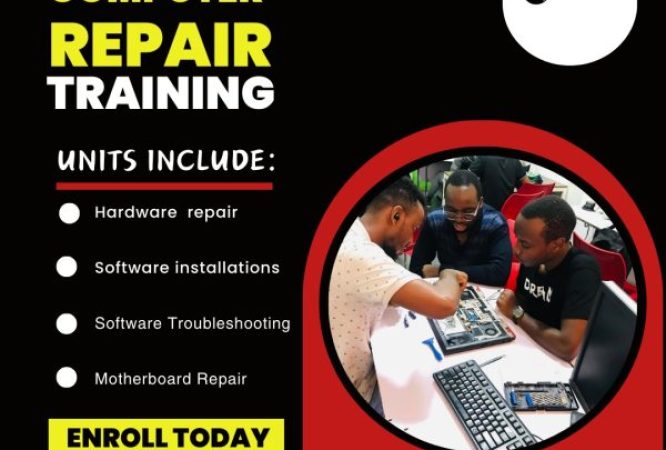
Many learners choose to combine this course with our Computer and Laptop Repair Training—a powerful combination that saves time and money while giving you full repair competence across multiple device types. Whether you want to start your own repair shop or work as a professional technician, this is one of the best short courses for youth in Kenya looking for fast employment or entrepreneurial opportunities.

Mobile Repair Training
Our mobile repair syllabus for the course is divided into 5 modules covering all the topics that are necessary to learn for mobile repair services.
Mobile Repair Tools

Course Details
- Training Model: Theory: 5%,Practical: 85%, Additional Practice: 10%
- Duration: 3 Months
- Fees: 20,000 per month. Need Financial Aid? Apply for Scholarship HERE
- No of slots: 30 per cohort (We maintain an admission limit of 30 students for every cohort. This is aimed at guaranteeing quality learning and great personalized experience during the training process)
Mobile Repair Syllabus
Training Modules
-
Basics and Basic Electronics
The first module will act as a bridging course for those students who do not have any prior knowledge about the field. For others, who already have prior knowledge about electrical and electronic engineering, this module will help them revise these concepts.
- Basics of mobile communication.
- Study of Digital Electronics.
- Assembling and disassembling of various models of mobile phones.
- Study of various tools and equipment used in mobile phone repairs.
- Study of parts inside a mobile phone.
- Using a multimeter.
- Use of DC Power Supply (Jhatka machine).
-
Hardware Repair

The second module will focus on hardware and teach the students how to handle and replace various electronic parts. It will help them to learn all the hardware repair procedures in a more comprehensive manner.
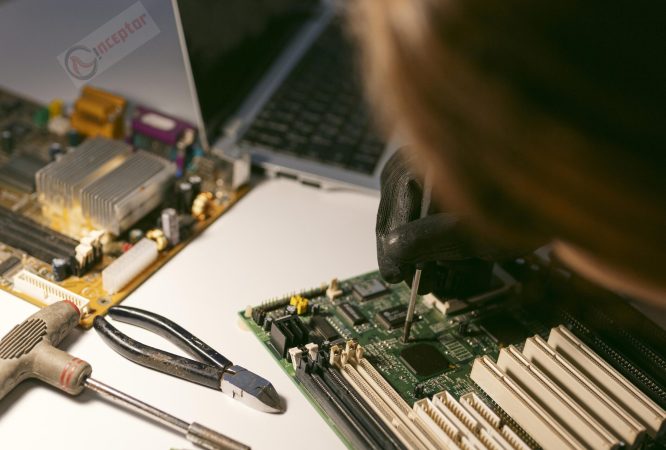
- Introduction and study of Printed Circuit Board (Motherboard).
- Details of various components on the PCB.
- Testing of various parts and components.
- Study of different ICs (chips) used on the motherboard.
- How to recognize various ICs.
- Soldering & desoldering of components by using a soldering iron.
- Soldering & desoldering of components by using a rework station.
- Reheating and mounting of various BGA and SMD chips.
- Ultrasonic cleaning procedure.
3. Mobile Software Repair
Software problems are some of the most common ones faced by smartphone users. Sometimes, a software problem can lead to hardware abnormalities as well. This module will teach you how to perform various software repairing techniques.
- Detailed study of various faults arising due to corrupt software.
- Introduction of various flasher boxes and software.
- Flashing of various brands of handsets.
- Removing virus from infected phones.
- Unlocking of handsets through codes and/or software.
- Use of various secret codes.
4. Basic and Advanced Troubleshooting
After receiving a customer’s complaint, it is important to understand where the problem of the phone lies – hardware or software; and then repair it accordingly. This is where the troubleshooting module will come in handy. This module will teach you how to troubleshoot the problems in a mobile phone almost like an experienced mobile phone repair technician.
- Fault finding, troubleshooting and repairing of various faults.
- Common repair procedure for hardware related faults.
- Common repair procedure for software related faults.
- Water damaged repair techniques.
- Circuit tracing, jumper techniques and solutions.
- Troubleshooting through schematic diagrams.
- Use of internet for troubleshooting faults.
- Advanced troubleshooting techniques.
5. Additional Learning
To be a successful mobile phone repair technician, one needs to know more than just the technical aspects of fixing a phone. This module aims to teach some additional topics to help you become a better mobile phone repair services provider.
- Clearing of all previous doubts
- Guidance to start and manage your own mobile repair center.
- Guidance to successfully work as a technician.
- Procuring tools, spare parts and accessories.
- Dealing with customers and distributors.
- Marketing your mobile phone repair business
We also teach our students various tips, tricks and trade secrets which are unknown to many technicians. This will help you in your all-round development and make you a professional mobile phone repair technician.
- Recommendation: You may also opt to combine Mobile Repair Training with Computer Repair Training entrepreneurial purpose and enjoy a discount of up to Ksh 20,000.
Grading Criteria
The course grading is structured around project milestones, providing you with a practical and hands-on assessment framework. Your progress will be evaluated based on the completion and submission of key project stages, allowing you to apply what you’ve learned effectively and receive feedback throughout your learning journey